

Romance Scams and How to Prevent Them
Romance scams are on the rise and can happen to anyone. With so many social platforms, scammers are becoming increasingly clever, finding more creative ways to access their victim’s finances.
These often start when someone online contacts you and appears interested in you. For weeks, or even months, you may message back and forth and form a connection. But ultimately, the person with whom you have built a connection is going to ask for money or find ways to access your finances.
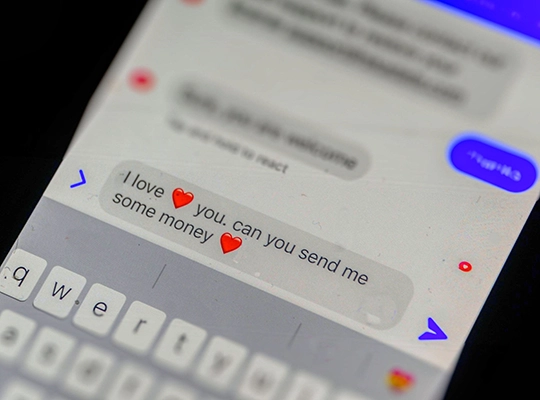
Love Bombing
Love bombing is a tactic that scammers use to exploit a victim’s finances through romantic or toxic relationship scams. It occurs when someone overwhelms a person with affection, attention, or grand gestures at the beginning of the relationship.
Some common signs are:
-
Too much, too soon: Over-the-top communication, intense declarations and promises, talks of a future together very early on.
-
Constant contact: Frequent calls, texts, or messages that make you feel like you are being constantly pursued or watched.
-
Lavish gifts or grand gestures: Unusual or excessive gifting as a form of control or to create obligation
It may seem like this person is a perfect match, but the speed, intensity, and emotional highs are often red flags. Ways to protect yourself from these scammers include:
-
Be cautious of early intensity: If someone is already saying “I love you” or making big plans with you, that is a red flag.
-
Protect your personal information: Avoid oversharing details about your finances or other personal information early on.
-
Watch for inconsistencies: Their stories may not add up. They have different job titles, provide vague answers, or avoid video calls. This could show that they aren’t who they say they are.
Crypto Scam
The crypto scam, also called “Pig Butchering”, uses the love bombing tactic to encourage their victims later to invest in cryptocurrency using a fake website or app.
Some common elements of this scam are:
-
WhatsApp: The conversations may begin on a dating site, but the target is quickly moved to chatting with the scammer on WhatsApp.
-
No video: When asked to video chat, scammers will always refuse and come up with various reasons they can’t.
-
Investment chat: Scammers claim to have inside knowledge of the cryptocurrency market and promise to help their victims make money.
These cryptocurrency scams can move quickly, and once funds are sent, they are gone. Here are some ways to protect yourself:
-
Never send money, trade, or invest based on the advice of someone you’ve met online.
-
Never talk about your financial situation with someone you’ve only met online.
-
Don’t provide your Social Security Number, banking information, or other identification information to anyone online or to a site you don’t know is legitimate.
-
Be cautious of individuals who claim to have investment opportunities and have a sense of urgency.
Romance scams thrive on trust, emotion, and urgency. Being aware is your strongest defense. Recognizing warning signs, slowing down online relationships, and protecting your personal and financial information can reduce the risk of becoming a victim of these scams.
If something feels rushed, secretive, or too good to be true, it is essential to trust your instincts and take a step back. Being cautious and pausing to verify is always a smart step.
If you feel you may have been a target in one of these scams or any type of fraud, contact us or your financial institution immediately.
Looking for more tips or information to help protect your finances? For more information, visit p1fcu.org/fraud.
Subscribe to our newsletter and podcast for ways to stay financially confident and protected.